
Exterior Painting
How Often Should You Paint Your House in New England?
· 6 min read
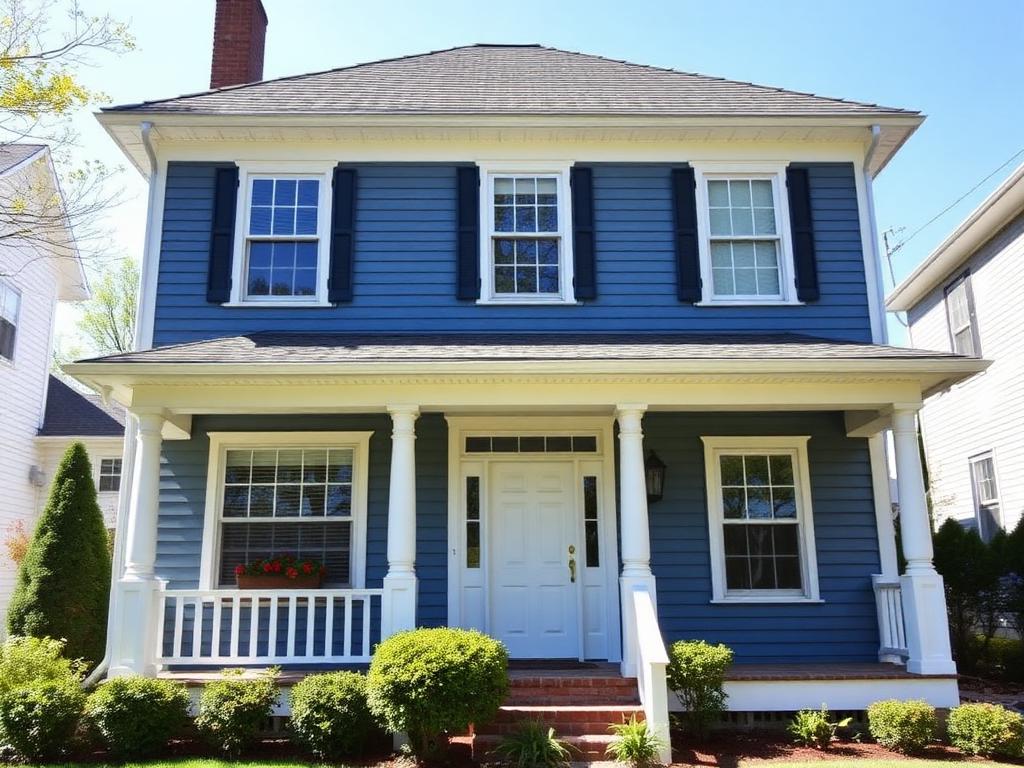
The intervals you read online usually come from national averages. New England is harder on a paint film than most of the country: winter freeze-thaw cycles work moisture in and out of wood, summer humidity feeds mildew, and coastal wind carries salt and grit that abrades the surface.
Exposure matters as much as material. On the same house, the south and west elevations often need attention years before the north side does.
Typical intervals here
- Painted wood clapboards or shingles: roughly 5 to 8 years, shorter on exposed coastal elevations
- Trim, fascia, window casings and doors: often sooner than the field of the siding
- Stained shingles: 4 to 7 years for semi-transparent, longer for solid stain
- Decks and porch floors: 2 to 4 years, since they take foot traffic, standing water and full sun
- Vinyl and aluminum siding, once painted: 8 to 10 years with the right coating system
Signs you should not wait
The calendar is a guideline; the surface is the real answer. Any of these means the film is no longer protecting the wood.
- Chalking — a powdery residue on your hand when you rub the siding
- Hairline cracking or alligatoring in the paint film
- Any peeling or lifting edges, especially on south and west elevations
- Bare or graying wood showing through, particularly on horizontal trim and sills
- Caulk joints that have split open at casings and corner boards
- Mildew or dark streaking that returns quickly after washing
Why coastal towns run shorter
In Hull, Cohasset, Scituate and the water-facing parts of Weymouth and Quincy, salt deposits sit on the film and hold moisture against it, while wind-driven rain finds every open joint. Homes a mile inland in Braintree, Norwell or Hanover routinely get a couple more years out of the same product.
Waiting costs more than repainting
Once bare wood is exposed through a winter, you stop paying for paint and start paying for carpentry. Rotted sill noses, soft trim ends and failed glazing all get added to the scope. Repainting on time is the cheaper of the two projects by a wide margin.
What extends the interval
Thorough washing, scraping to sound wood, sanding feathered edges, priming all bare areas, replacing failed caulk, and correcting the drainage and vegetation that keep a wall wet. Preparation is what determines whether you are back on a ladder in five years or in nine.