Project Story
Deck Restoration in Braintree, MA: Weathered Boards to a Clean Finish
· 4 min read
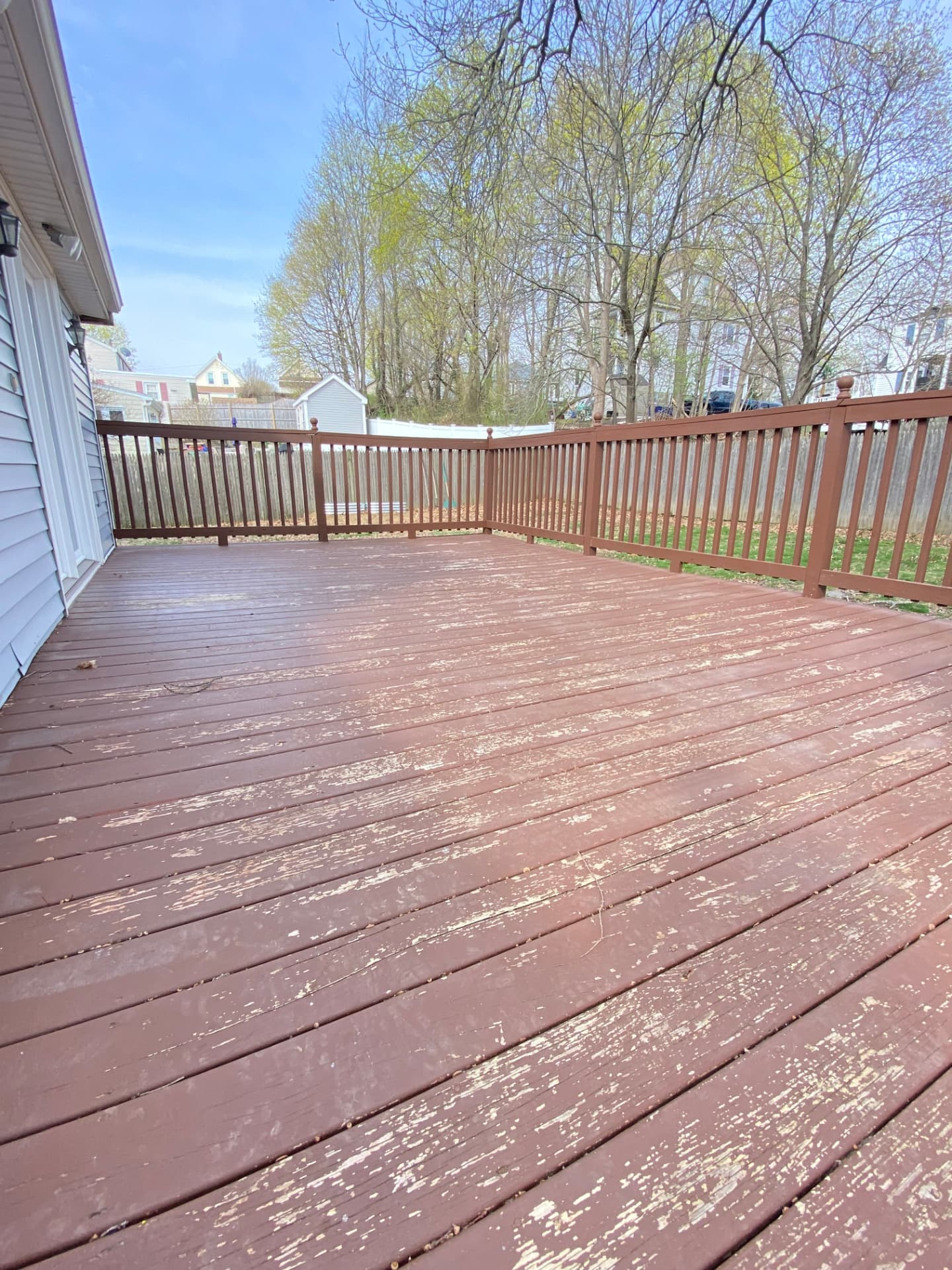
Decks on the South Shore take more abuse than any other painted surface on a house. Summer sun breaks down the old coating, winter freeze-thaw opens the grain, and moisture gets into every fastener and end cut.
By the time most homeowners call, the boards look grey and fuzzy — but the structure is usually fine. That is a refinishing project, not a rebuild.
Wash first, always
Stain cannot bond to mildew, pollen or a failing old coating. We wash the deck, let it dry to the right moisture level, and only then decide what sanding it needs. Staining a damp deck is the fastest way to a peeling deck.
Sanding, fasteners and the details people skip
The parts that fail first are the ones that get rushed: end grain, railing tops, stair treads and the shaded areas under the rail. Those get extra attention because that is where water sits.
- Sand raised grain and rough spots flat
- Set or replace popped fasteners
- Treat end cuts and railing tops
- Coat stairs and handrails, not just the field boards
Solid or semi-transparent?
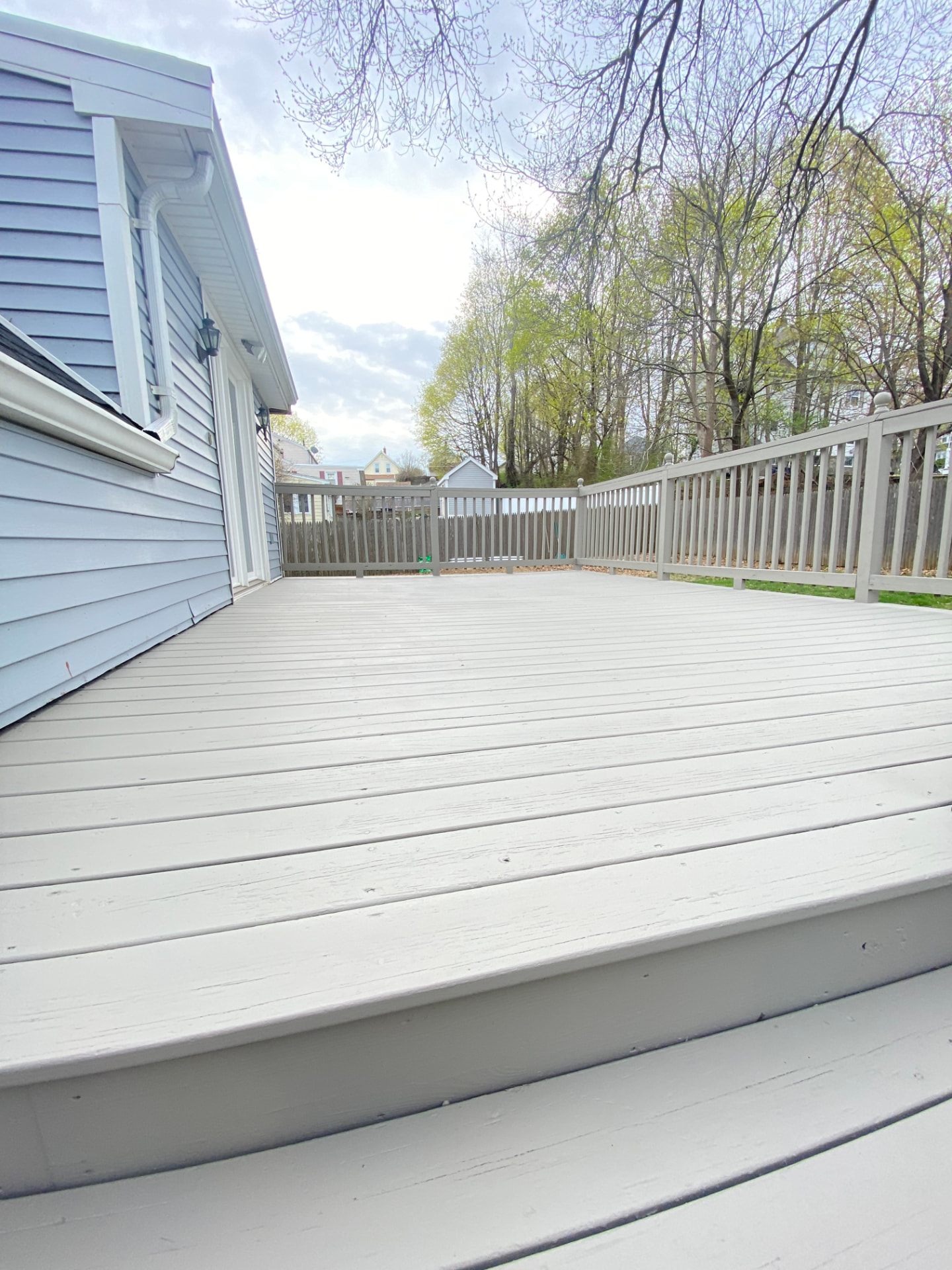
Semi-transparent stain keeps the wood grain visible and is easy to refresh, but it needs recoating more often. Solid stain hides more of the age and weathering and holds up longer on boards that have already lost their color.
On an older deck like this one, hiding the history is usually the better answer — and it gives you a much more even look across old and new boards.
Keeping it that way
A quick wash each spring and a recoat before the finish gets thin keeps a deck out of the strip-and-restart cycle. That is a much smaller job than a full restoration.