
Paint Problems & Repairs
Best Paint for Humid Bathrooms and Basements
· 6 min read
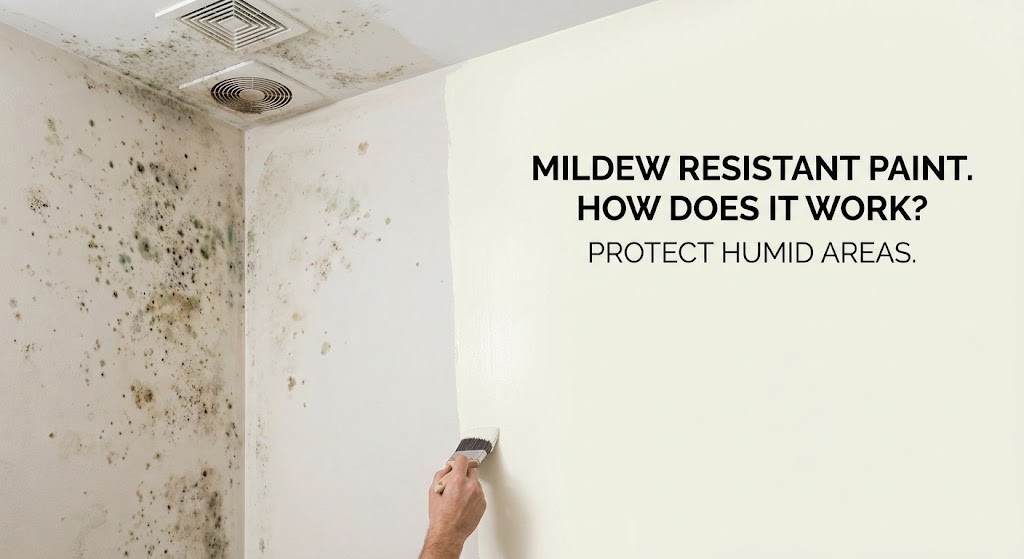
Coastal humidity, cold foundation walls and August dew points make basements and bathrooms the two rooms where standard wall paint gives up first. You see mildew spotting, chalky patches, or a film that simply lets go.
Good products help. But no coating solves an active moisture problem, so the order of operations matters more than the label on the can.
What moisture actually does to a paint film
Water vapor passing through or condensing on a surface breaks the bond between coating and substrate, and it feeds mildew on any organic residue left on the wall. Flat, porous paints absorb that moisture rather than shedding it.
In basements there is a second path: water moving through concrete or block from outside carries minerals with it, which pushes coatings off from behind.
Handle the moisture first
- Bathrooms: a correctly sized fan vented outside, used during and after every shower
- Basements: gutters and downspouts discharging away from the foundation, and grading that slopes away
- Dehumidification in summer months when dew points climb
- Repair caulk, grout and any plumbing drips before painting
- Let masonry and patched areas dry fully — coating damp substrate guarantees failure
What to use in a bathroom
Use a bathroom-specific coating with mildew resistance in satin or eggshell — enough film strength to shed steam and be wiped clean. On ceilings above a shower, use a moisture-resistant ceiling product rather than standard flat.
Prime bare and patched areas, and use a stain-blocking primer anywhere there was a water stain.
What to use in a basement
On concrete and block, a masonry-appropriate primer or block filler comes first so the finish coat has a uniform surface to bond to. Efflorescence — that white mineral bloom — must be removed dry, not painted over.
On framed basement walls, treat it like a bathroom: mildew-resistant product, satin sheen, and airflow.
Cleaning before coating
Mildew is a living growth, not dirt. Painting over it traps it and it comes back through the new film. Surfaces need to be cleaned with an appropriate cleaning solution, rinsed and dried before any primer goes on.